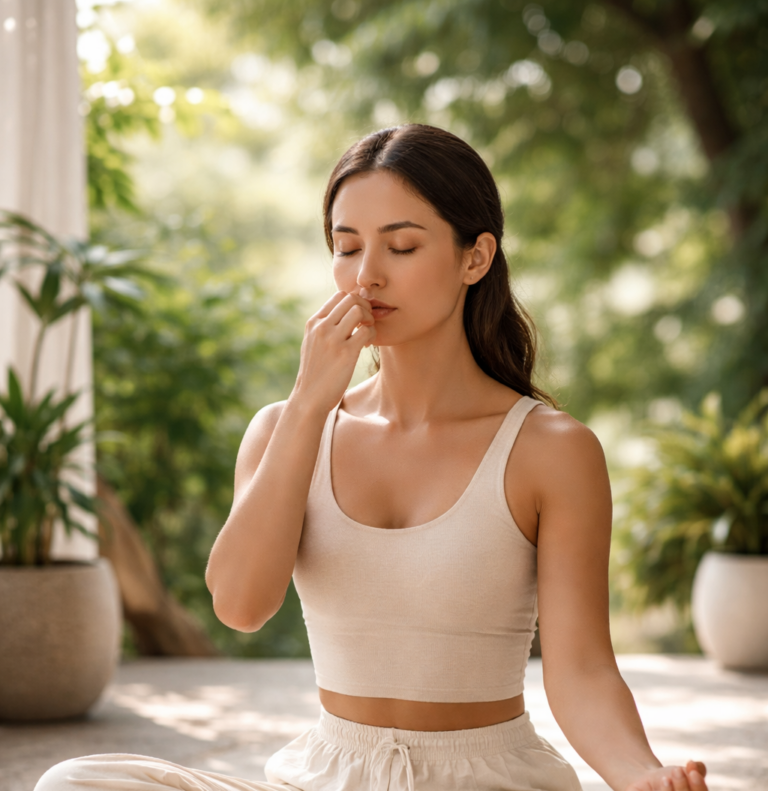

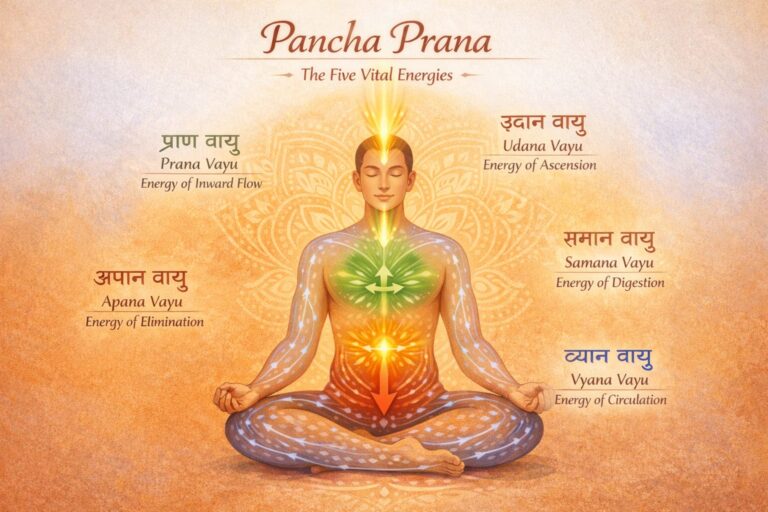
The term “prana” refers to the vital energy or breath within the body. Prana is the pranic energy that gives life, sometimes known as the “life force,” while “ayama” is control on a more subtle level. Thus, pranayama is “Control of Breath”. By regulating the pranic energy cycles with the aid of pranayama, one can achieve a healthy body and mind. In his book of Yoga Sutras, Patanjali describes pranayama as a way to achieve higher states of awareness. He also emphasises the practise of holding one’s breath as a key step to achieving Samadhi; the 8th limb of Ashtanga Yoga.
Types of Prana
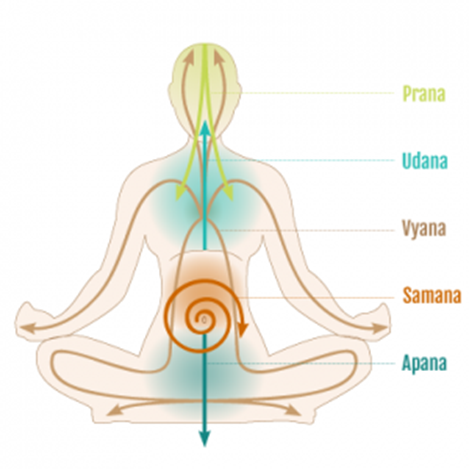
The five forms of prana are called ‘pancha prana’ or ‘pancha maha prana’. They are:
- Apana
- Samana
- Vyana
- Udana
- Prana
They are in charge of different pranic processes in the body. The most significant of these are Prana and Apana. When Apana flows downward, Prana flows upward. Pranayama practice brings these pranas’ activity into balance, which promotes both physical and mental wellness.
Prana Vayu (Water element)
The inwardly moving breath is known as prana vayu (not to be confused with the master Prana).
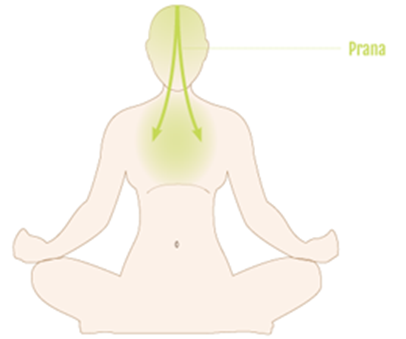
The INTAKE is controlled by PRANA vayu. It flows within and downward, giving us the essential energy that propels us through life. It mostly resides in the heart, lungs, and head. An imbalance in the flow of prana might manifest as breathlessness, asthma, sleep apnea, heart palpitations, or stroke. Some techniques for maintaining the harmony of Prana Vayu include:
- Focus on Inhalation
- Prana breath: Take a deep breath in through your nose, eyes, ears, and third eye. Hold the breath for a second. Then, exhale through your third eye to release the energy.
- Contact with nature, visualizations and rituals are examples of “positive impressions.”
- Color therapy
- Sound therapy
- Aromatherapy
- The mind produces prana during meditation.
- Prana circulates wherever there is emptiness and silence.
Apana Vayu (Earth Element)
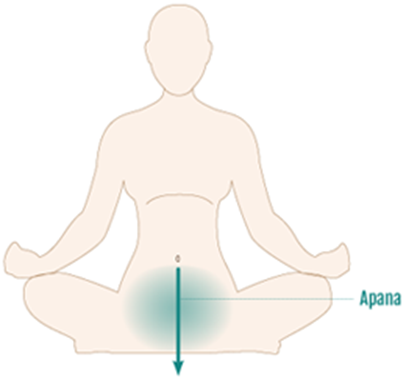
Elimination is carried out by APANA vayu. It goes downward and outward and aids in keeping things inside. It is mainly located in the lower abdomen and is involved in functions like bone health, reproduction, and excretion (which controls mineral absorption and retention). Constipation/diarrhoea, IBS, menstruation problems, sexual troubles, and problems with bone density can all be symptoms of an imbalance in the Apana flow.
To maintain the equilibrium of your Apana Vayu, you may try the following:
- Concentrate on exhaling and holding your breath (holding after exhale)
- Apana Breath
Inhale: Draw energy into the abdomen
Exhale: As you direct the energy from your belly into your feet or the ground, hold your breath for a minute.
While doing this; focus on your root chakra.
3, Do ‘Mula Bandha’ (Contracting pelvic area muscles).
4. Eat wholesome foods. Consume very less or no junk food.
Samana Vayu (Fire element)
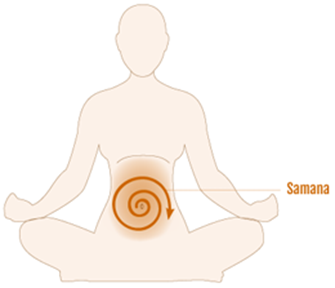
SAMANA Vayu moves in a churning motion towards the centre and is in charge of processing things. The navel area is where it is most prominent. Every level of digestion, including the cognitive level, is under its control. It is connected to the assimilation, absorption, and digesting processes. Samana vayu function imbalances can cause problems with metabolism, poor digestion, bloating, and appetite loss.
Try the following to put Samana Vayu on track:
- Concentrate on exhaling while contracting your abs.
- Pause in breathing (hold after Exhale)
- abdominal muscles gradually contracting (Zip-up)
- Practices similar to Uddiyana Bandha
- Samana breath (Imagine bringing the energy inward towards your abdomen as you inhale. As you exhale, tighten your abdominal muscles and visualise your energy becoming more concentrated).
- Kapalbhati pranayama (to activate agni)
- Good food and fasting
Vyana Vayu (Space element)
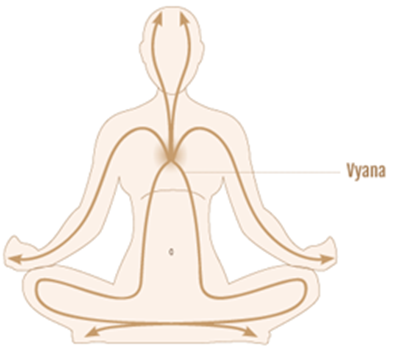
VYANA Vayu is in charge of distribution. It moves in a pulsating, circular pattern as it is released outward. It is located in the heart and lungs and is associated with the cardiac, circulatory, and voluntary nervous systems.
Imbalances might manifest as MS symptoms, peripheral neuropathy, clogged arteries, heart attacks, and edoema.
Vyana vayu is benefited by the following:
- Concentrate on expansion/exhalation and inhalation.
- Retaining one’s breath (hold after Inhale).
- Put your hands on your chest and take a Vyana breath. (Inhale: Extend your arms outward, filling your lungs from the centre out to the edges. Hold for two seconds. Exhale: Put your hands back on your chest. Maintain your attention on your heart’s centre.)
- The use of asanas as prana pumps.
- Routines that are heartfelt
- Rituals, prayer, and any other practise that brings you joy or touches your heart.
Samana vayus and Vyana are the opposing powers of expansion and contraction. With Vyana, each is given a separate region of action and the ability to be separated into its constituent elements. It also maintains the nadis’ openness, clarity, cleanliness, and consistency of operation. Samana facilitates the fusion of the elements and keeps them together. Samana directs the digestive fire, or agni, with fuel that must burn evenly.
Udana Vayu (Air element)
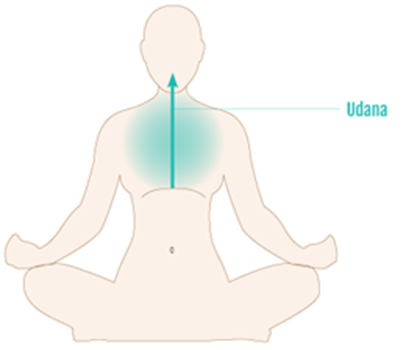
The UDANA vayu is in charge of growth. It ascends as a result of other vayus functioning correctly. It regulates our ability to stand, speak, exert effort, be enthusiastic, and have will. It is concentrated near the diaphragm and throat, where it controls a number of functions related to breathing, speaking, and thinking (via facilitating blood flow to the brain). Examples of Udana vayu functional imbalances include asthma, emphysema, stuttering, hoarseness of voice, sorrow, poor memory, and a lack of creativity, direction, or goals.
Try the following to improve Udana Vayu’s functionality:
- Concentrate on exhaling, especially with your diaphragmatic breathing
- Udana Breath (Inhale: Inhale deeply while focusing on the throat chakra. Exhale: Chant “OM”)
- Jalandhara Bandha-style gestures
Conclusion
In understanding the Pancha Prana, we begin to see that breath is not merely a biological function but a sacred bridge between body, mind, and consciousness. When these five vital forces move in harmony, life flows with clarity, vitality, and inner balance.